Satellite Data Streams and Their Unexpected Role in Shaping In-Play Betting Markets for Weather-Dependent Sports
Elena Günther · Sep 14, 2026
Satellite Data Streams and Their Unexpected Role in Shaping In-Play Betting Markets for Weather-Dependent Sports
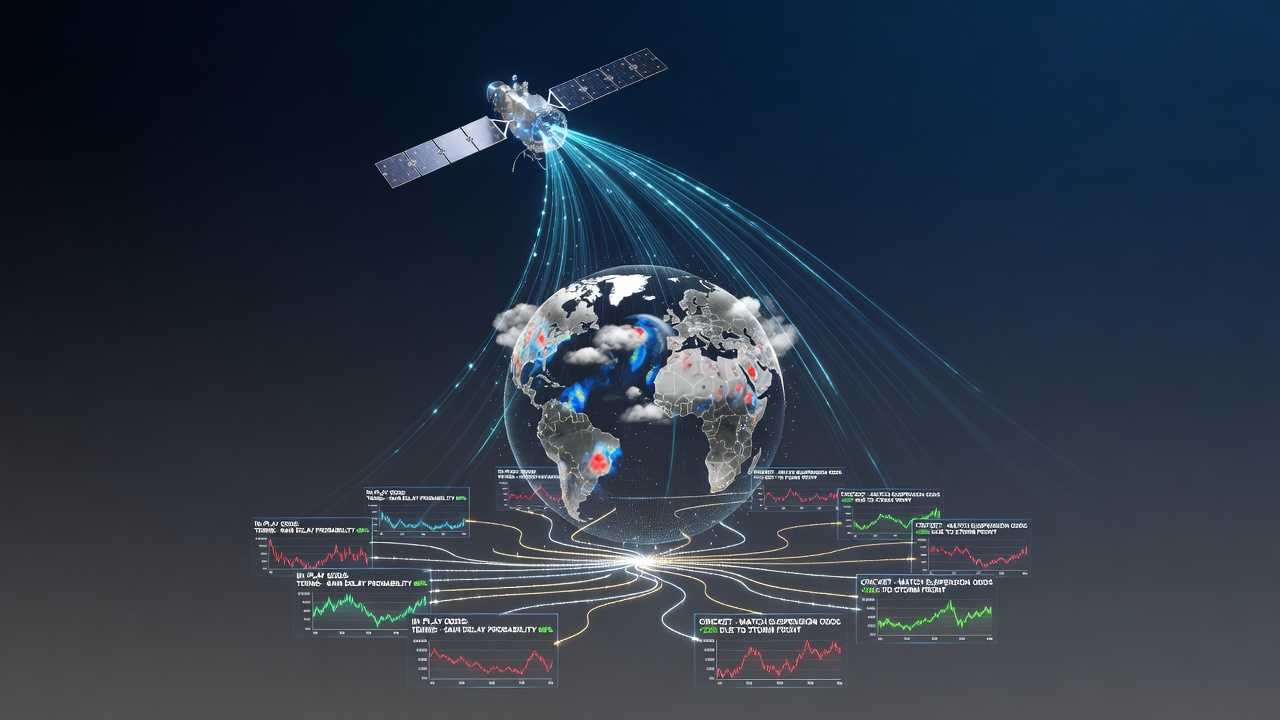
Satellite networks have supplied continuous streams of atmospheric information for decades, yet their integration into live wagering platforms for sports such as tennis, golf, cricket and sailing has accelerated sharply since 2024. Real-time feeds from polar-orbiting and geostationary satellites now deliver granular measurements of wind speed, humidity, precipitation intensity and temperature gradients that directly influence in-play odds adjustments across multiple operators. Bookmakers ingest these data layers through application programming interfaces that update probabilities within seconds of each new satellite pass or ground-station confirmation. Weather-dependent competitions generate highly variable conditions that shift point-by-point or hole-by-hole, and operators have responded by embedding satellite-derived variables into their pricing engines. In tennis, for example, cross-court wind vectors above 25 kilometres per hour alter serve percentages enough to prompt immediate line movements on next-point markets. Golf tournaments on exposed links courses see similar recalibrations when satellite gust maps indicate sustained headwinds on par-three holes. Cricket matches scheduled in regions prone to sudden monsoon cells rely on precipitation probability fields updated every fifteen minutes, allowing markets on rain interruptions to tighten or widen without human intervention.Technical Integration of Satellite Feeds
Operators combine data from multiple orbital platforms, including the United States GOES-R series and the European Sentinel constellation, to reduce latency and fill coverage gaps. A single satellite might refresh visible and infrared imagery every ten minutes over mid-latitudes, while microwave sensors on complementary spacecraft penetrate cloud cover to report rainfall rates beneath the storm tops. These layered inputs feed machine-learning models that translate raw geophysical values into probabilistic outcomes for specific sporting events, such as the likelihood a tennis set will exceed a given duration under measured humidity levels.
Processing pipelines strip out extraneous noise and align timestamps with match clocks before pushing revised odds to mobile and desktop interfaces. Observers note that latency between satellite observation and odds publication has dropped below eight seconds on major platforms during peak tournament windows. This speed matters because bettors monitoring multiple markets simultaneously can place wagers before the next data refresh arrives, creating brief arbitrage windows that close once the subsequent satellite packet lands.

Regional Examples and Market Responses
Australian Open tennis organisers publish court-level anemometer readings that operators cross-reference against geostationary satellite wind fields over Melbourne. When discrepancies exceed defined thresholds, algorithms widen spread markets on total games to account for measurement uncertainty. Similar protocols operate at the British Open, where coastal wind data from Sentinel-3 passes inform live handicap adjustments on individual holes. In September 2026, the Copernicus Atmosphere Monitoring Service is scheduled to release enhanced aerosol and boundary-layer products that several European operators have already contracted to test during the autumn golf majors.
Industry reports from the National Oceanic and Atmospheric Administration document a 37 percent increase in commercial licensing of near-real-time satellite products between 2023 and 2025, with sports-betting analytics cited as one growth segment. Researchers at the University of Melbourne have published findings showing that satellite-informed models reduced pricing errors on rain-delay markets in the Australian Football League by an average of 12 percent during the 2024–2025 season. These efficiency gains translate into narrower margins for operators yet higher trading volumes because bettors perceive the odds as more responsive to unfolding conditions.
Emerging Data Partnerships and Standards
Trade associations representing both satellite providers and wagering platforms have begun drafting interoperability standards that specify minimum refresh rates and quality flags for meteorological variables used in betting engines. The Canadian Space Agency contributed early drafts focused on northern-latitude coverage, where polar-orbiting satellites provide the densest revisit times. Partnerships announced in mid-2025 between data aggregators and tournament organisers aim to embed verified satellite metadata directly into official scoring feeds, thereby reducing disputes over which dataset governs a disputed line movement.
Regulatory bodies in Australia and several EU member states require operators to disclose the primary data sources underpinning automated odds adjustments when those adjustments exceed preset volatility thresholds. Compliance documentation filed for the 2025 calendar year shows that satellite-derived wind and precipitation fields now rank among the top three external inputs cited by major platforms operating weather-sensitive markets.
Conclusion
Satellite data streams have moved from background environmental monitoring into core infrastructure for in-play pricing of weather-dependent sports. The combination of frequent orbital revisits, low-latency distribution networks and statistical models trained on historical match outcomes has produced measurable shifts in how live markets respond to atmospheric changes. As additional sensors come online and processing pipelines continue to tighten, the role of these streams is expected to expand rather than contract through the remainder of the decade.